
The short answer: read the input line first
A charger with "Input: 100-240V" printed on it runs on the mains almost anywhere, so taking it abroad means packing just a plug adapter to fit the local socket. The adapter changes the shape of the pins; it does nothing to the voltage, and a wide-input charger does not need anything done to the voltage.
A voltage converter is a separate device for a separate problem, and for a modern USB charger it is weight you can leave at home. The one exception is kit built for a single voltage, which is almost never a phone or laptop charger. So the first move is to read the label, not to buy a converter.
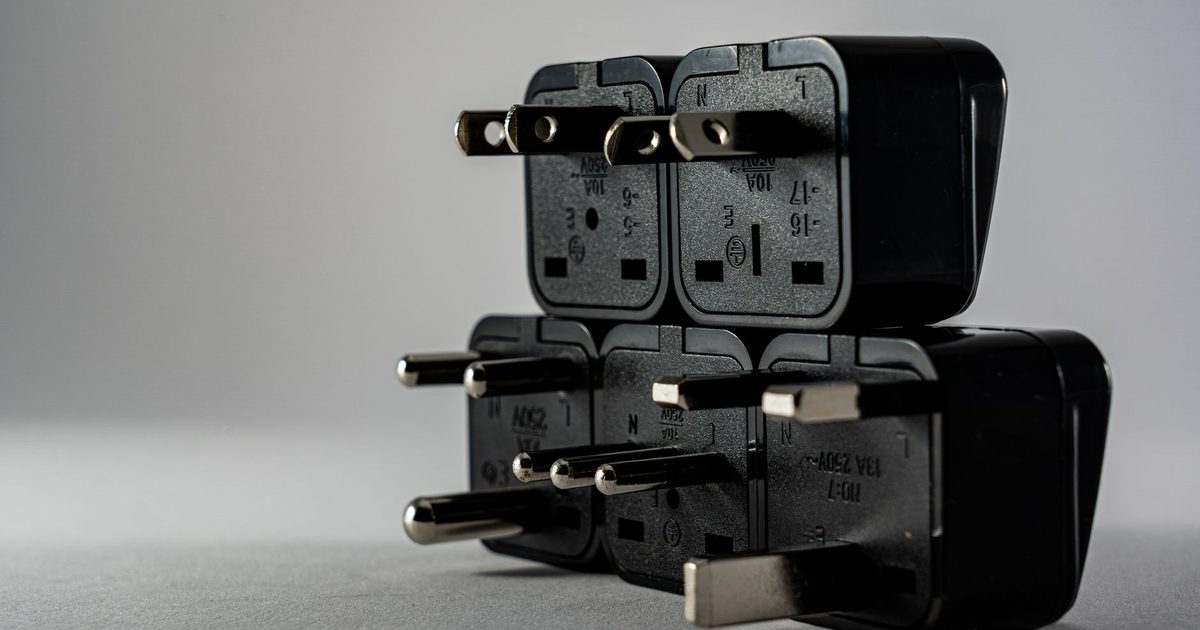
A plug adapter and a voltage converter do different jobs
Sockets differ by country in two separate ways: the shape of the holes and the voltage behind them. A plug adapter deals only with the shape. World Standards, a reference site for travellers, puts it plainly: travel adapters "simply allow a device from one country to be plugged into the wall outlet of another country. However, they do not convert electricity."
A voltage converter deals with the voltage. It steps the mains up or down so a device made for one voltage can run on another, such as a 120V device used on Europe's 230V supply. The two are not interchangeable: an adapter never touches the voltage, and a converter is pointless once your charger already accepts the local voltage.
Read the input line on the brick
Whether you need a converter comes down to one line of small print, usually near the model number and the safety marks. If it reads "Input: 100-240V" (sometimes written 100V-240V, 50/60Hz), the charger is dual-voltage: it is built to run on the mains in almost every country and needs only a plug adapter to fit the socket.
Most phone and laptop chargers are made this way. Apple states that "Apple USB power adapters are designed to be used with power sources rated to provide 100V AC to 240V AC at 50 Hz to 60 Hz," which covers both the 120V and the 230V regions on one brick. World Standards goes further for the whole category: "nowadays all laptop, tablet and phone chargers are dual voltage, so they can be used with only a travel adapter." Even so, read your own label rather than assume, because a few chargers are sold in single-voltage versions for one region.
When a converter is actually the answer
A converter earns its place only with a single-voltage device, meaning its label shows one figure such as "Input: 120V" rather than a range. That kind of device needs a converter to run on a different supply. World Standards gives the everyday example, a hair dryer, and notes that the simple converters sold for such heating appliances are "designed for short-term use (1-2 hours)" rather than running all day.
For a USB charger this case almost never applies, so carrying a converter for one is just extra bulk: a dual-voltage charger already runs on the local mains by itself. The sensible travel kit is a 100-240V charger plus a plug adapter for each socket type you will meet.
If you are choosing a charger to travel with, our 65W GaN charger guide compares compact plugs, and its FAQ covers taking one abroad. For the stretches with no socket at all, such as a long flight, the best power bank for long flights guide has the options that pass the cabin rules.
FAQ
Q: Do I need a voltage converter for my phone charger abroad? A: Almost certainly not. Modern phone and laptop chargers are dual-voltage, so abroad they ask only for a plug adapter that fits the socket. Keep a converter in mind only for the rare single-voltage device.
Q: What is the difference between a travel adapter and a voltage converter? A: A travel adapter changes the shape of the plug so it fits a foreign socket; World Standards notes adapters "do not convert electricity." A voltage converter changes the mains voltage itself, for a device built to run on only one voltage.
Q: How do I know if my charger is dual-voltage? A: Look at the small print near the model number for the input rating. A range such as 100-240V means dual-voltage; a single figure such as 120V means it is built for one region and would need a converter elsewhere.
Q: When would I actually need a voltage converter? A: For single-voltage devices, which are usually heating appliances like some mains hair tools rather than USB chargers. The small travel converters sold for them are meant for short bursts, not all-day use.